Why Gothic Poetry Still Speaks to the Soul | Curator of Woe
Explore why Gothic poetry still resonates through grief, sorrow, memory, spiritual struggle, beauty in darkness, and the world of the Curator of Woe.
2 min read
Why Gothic Poetry Still Speaks to the Soul
Gothic poetry endures because sorrow endures.
Across generations, readers have returned to dark halls, storm-lit windows, mourning figures, haunted memories, and spiritual questions that refuse to rest. Gothic poetry does not turn away from grief, fear, guilt, loss, longing, or the mystery of death. It enters those places slowly, with candle in hand, and gives language to what the heart often cannot explain.
The Gothic has always understood that darkness is not empty.
It is filled with memory.
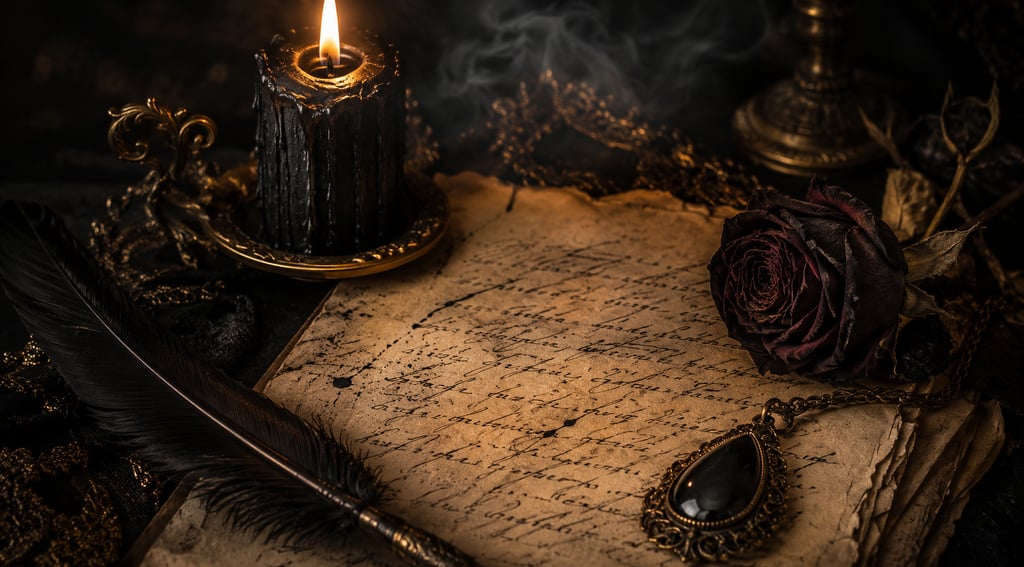
A ruined chamber may hold regret. A raven may carry warning. A locked door may suggest a secret the soul has buried. A candle may become the last fragile sign of hope. A tear may hold more truth than an entire confession. Gothic poetry uses images like these not merely to decorate a page, but to reveal the inner world of suffering, endurance, and spiritual unrest.
This is why Gothic poetry still speaks so deeply.
It allows grief to become visible.
Modern life often encourages people to move quickly past sorrow. Pain is softened, hidden, explained away, or rushed toward recovery. But some wounds do not obey such speed. Some losses echo. Some memories return. Some regrets become chambers the soul revisits again and again.
Gothic poetry does not demand that sorrow disappear before it is understood. It gives sorrow a form. It lets grief stand in the room. It lets remorse speak. It lets the shadow have a voice.
In the world of The Curator of Woe, this truth is central.
Woe is not treated as simple sadness. It is a force with weight, shape, history, and consequence. It gathers in ancient hallways, sealed chambers, cursed paths, and roots that twist beneath the earth. It appears in ravens, ledgers, chains, veils, tears, and the haunted faces of those who carry what cannot easily be released.
The Curator herself is part of this poetic tradition.
She does not arrive to silence sorrow. She does not erase the wound. She does not deny the darkness. She witnesses. She records. She remembers. Through her presence, grief becomes something seen rather than abandoned.
That is one of the deepest powers of Gothic poetry: it does not make sorrow meaningless.
It suggests that pain, however terrible, may still reveal truth. It may reveal love that was lost, mercy that was needed, forgiveness that was withheld, hope that struggled to survive, or a soul still reaching toward redemption.
Gothic poetry also speaks because it understands beauty in darkness.
The beauty is not cheerful. It is not easy. It is the beauty of candlelight against stone, of gold against black, of a single voice crying out in a desolate place. It is the beauty of endurance. It is the beauty of a soul that has suffered and yet still speaks.
For readers drawn to poetic horror, spiritual symbolism, dark fantasy, and emotional storytelling, Gothic poetry offers more than atmosphere. It offers recognition. It tells the reader: your grief is not invisible. Your questions are not strange. Your sorrow has a language.
The Curator of Woe Gothic graphic novella series carries that language into illustrated form, combining poetry, image, symbol, and shadow. Each page becomes part of a larger record of anguish, consequence, compassion, and the difficult hope that may still flicker in the dark.
Gothic poetry still speaks because the soul still knows Woe.
And where Woe gathers, the Curator is never far.
The Curator of Woe gives sorrow a voice.