The Altar of Redemption: Grace, Woe, and the Pilgrim’s Plea | Curator of Woe
Discover the meaning of the Altar of Redemption in the world of the Curator of Woe, where sorrow, intercession, grace, and the hope of redemption meet.
3 min read
The Altar of Redemption: Where Woe Kneels Before Grace
In the world of The Curator of Woe, not every place of sorrow is a prison.
Some places are thresholds.
Some places are sanctuaries.
Some places are where anguish, at last, is carried before the possibility of mercy.
The Altar of Redemption is one such place.
It stands apart from the darker chambers, haunted corridors, and sorrow-rooted landscapes that fill the Curator’s world. Though it is still clothed in Gothic shadow and solemn beauty, the Altar of Redemption is not defined by despair alone. It is a place where Woe is not denied, but brought forward. It is where grief is witnessed, where the burdened soul is remembered, and where the plea for redemption is laid before a higher grace.
This gives the altar a sacred and powerful meaning within the Curator of Woe universe.
The Altar of Redemption is not simply an object or a backdrop. It is a spiritual destination. It represents the moment when sorrow ceases to wander in silence and is finally presented, with reverence and trembling, before the hope that it may yet be answered.
Not all who come before the altar arrive in the same way.
Some come broken by grief.
Some come bound by regret.
Some come carrying the ache of past offenses, wounds, or lost chances.
Some come as Pilgrims ensnared by chains of Woe, unable to free themselves, yet not wholly abandoned.
And some do not come alone.
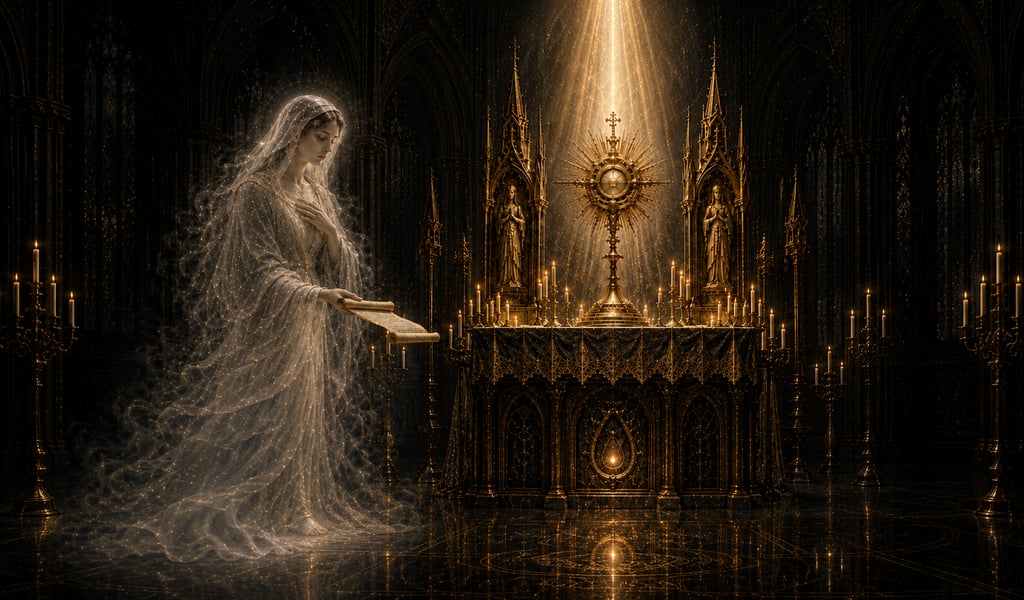
In the deeper mythology of the Curator’s world, the Kindred Spirit of Intercession plays a sacred role here. She is the one who receives the Curator’s tearful plea and places it before the Altar of Redemption on behalf of the suffering soul. In this way, the altar becomes not merely a place of sorrow, but a place of petition. It is where anguish is lifted, named, and offered into the possibility of grace.
This makes the altar especially important in the world of Sacrament of Tears.
There, tears are not only signs of suffering. They become part of a sacred movement. Sorrow is not left to echo endlessly in the dark. It is carried forward. It is borne. It is presented. The Altar of Redemption becomes the place where the grief of the soul and the mercy beyond the soul may, for a moment, stand face to face.
That does not mean redemption is simple.
The Curator of Woe has never been a world of easy comfort or shallow answers. Redemption, here, is not sentimental. It does not erase consequence as though nothing has happened. It does not pretend pain was an illusion. Rather, it suggests that even the soul most burdened by Woe may still be brought before something holier than its suffering.
That is what makes the altar so moving.
It is a place of solemn hope.
The candles that surround it do not merely illuminate stone and ornament. They signify vigil. The descending light does not merely beautify the chamber. It signifies presence. The written plea held before the altar is not merely a page. It is testimony. It is sorrow given words. It is the cry of one who cannot save themselves and must be carried further than their own strength can reach.
Those who come before the Altar of Redemption come in humility.
They come as mourners.
They come as petitioners.
They come as souls still longing for release, mercy, or remembrance.
And in the world of the Curator, that longing matters.
For not every shadowed place is the end of the journey. Some are the place where the soul finally kneels. Some are where Woe is met by witness. And some, like the Altar of Redemption, are where even tears may become an offering.
In that sacred space, sorrow is no longer only a wound.
It becomes a plea.
It becomes a prayer.
And perhaps, by grace, it becomes the beginning of redemption.
The Altar of Redemption is where Woe is carried, witnessed, and laid before grace.